Su carrito está vacío



Carrito
They paid off more than $30,000 in student loans and cleared their car debt three years early. Their approach combined disciplined budgeting with spreadsheets that helped them organize their money—and make progress visible.
You know when your next payment is due.
But when is your last one?
For many households, that question is surprisingly difficult to answer.
There’s a credit card payment on the 8th. A car payment on the 15th. Another balance waiting at the end of the month.
You pay. You check the account. You move on to the next bill.
And somehow, after another month of doing what you’re supposed to do, the finish line still feels far away.
Part of the explanation becomes clearer when you look at what happens inside each payment.
Imagine a $6,500 credit card balance at a 24% annual interest rate.
Using a simplified monthly calculation, the first month’s interest is about $130.
Make a $150 payment, and only $20 goes toward reducing the original balance.
You sent $150. Your debt fell by $20.
That gap helps explain why paying faithfully can still feel like standing still.
Now look at what happens when the payment changes:
| Estimated result | $150/month | $200/month |
|---|---|---|
| Time to pay off | 102 months | 54 months |
| Total interest | $8,763 | $4,103 |
In this illustration, an additional $50 each month shortens repayment by four years and reduces interest by approximately $4,660.
The difference is larger than the extra payment might suggest because reducing the balance sooner also reduces future interest.
Illustration calculated using a fixed 24% APR, interest applied monthly at APR ÷ 12, payments at month-end, and no fees or new charges. Final payments are smaller. Actual credit card calculations and results vary.
Your own numbers will be different.
But that is precisely the point: until you calculate them, it’s hard to know what your current payments are doing—or what a change could accomplish.
Consider a familiar household.
She works. Her partner works. The bills get paid.
There are groceries to buy, insurance renewals to remember, and something for the kids that wasn’t in last week’s budget.
She knows the debts need attention. They already get plenty of her paycheck.
What she doesn’t have is one clear view of how everything fits together.
Should she focus on the smallest balance? The highest interest rate? What happens after the first debt is gone?
And if she finds an extra $50, will it make enough difference to feel worthwhile?
Every account gives her another due date. None of those due dates, on its own, gives her a household payoff plan.
So she keeps making payments and hoping the balances will look better next month.
Keeping up with payments takes effort. Seeing where that effort leads takes a plan.
Jose and Francis brought different strengths to the same challenge.
Jose, an engineer with a master’s degree, enjoyed turning numbers into practical spreadsheets. Francis, a nurse, helped make those tools approachable and easy to use.
Parenthood became a turning point. Their family’s financial future gave their shared interest in spreadsheets a deeper purpose.
They also had financial obligations of their own.
According to their story, disciplined budgeting and the spreadsheets they created helped them repay over $30,000 in student loans and finish paying off their car three years ahead of schedule.
Those were their results, shaped by their income, debts, and decisions.
For another family, the numbers—and the timeline—will be different.
But the questions may sound familiar:
What do we owe?
Where should we focus?
How can we tell whether we’re making progress?
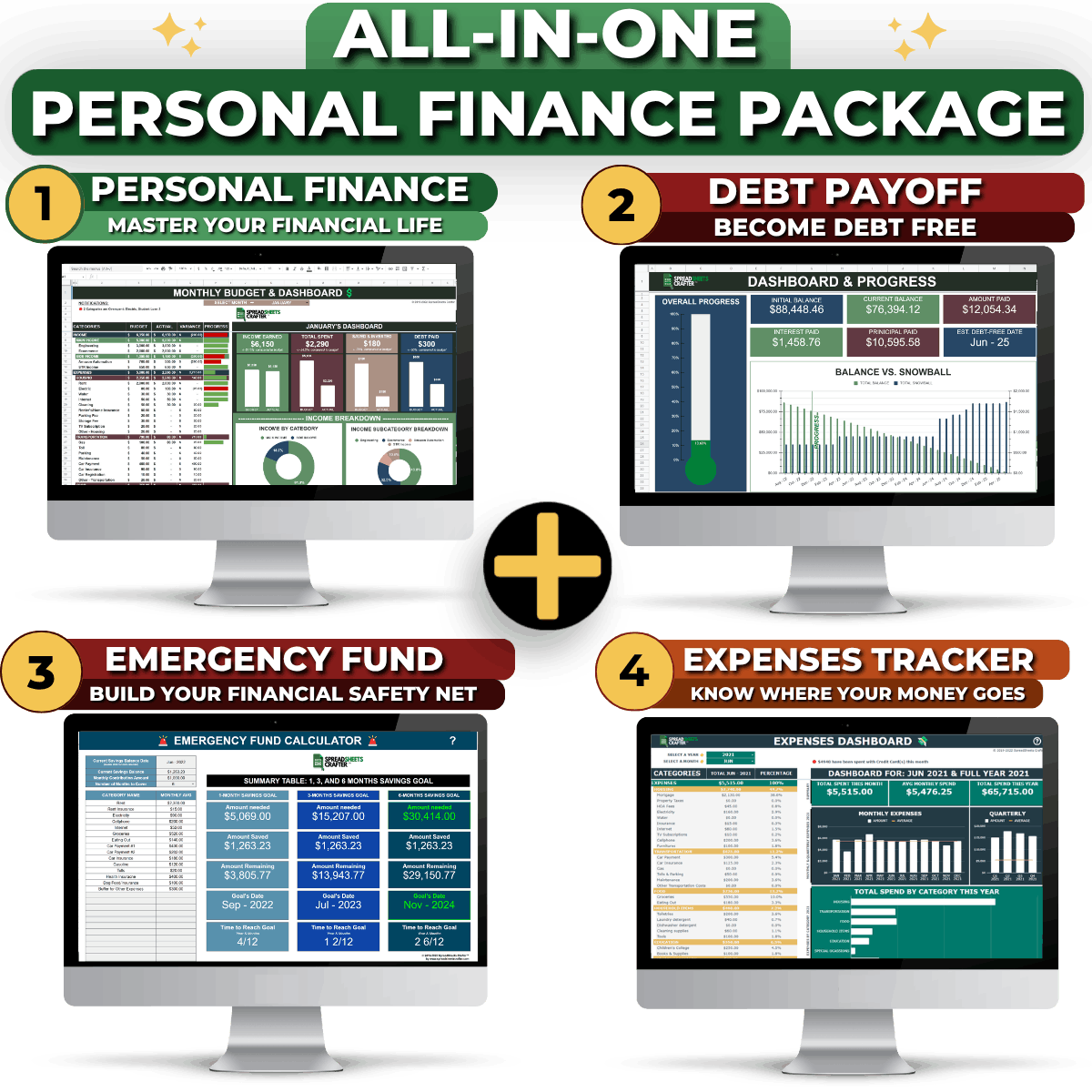
The Debt Payoff Calculator and Tracker brings your balances, interest rates, and minimum payments together so you can explore a repayment plan.
Compare snowball and avalanche strategies. Add extra payments. See an estimated completion date and a payment schedule based on your inputs.
It also separates principal from interest, helping you see how much of your payments goes toward reducing what you owe.
Instead of trying to picture the next several years in your head, you have numbers to review.
Instead of wondering whether a payment change matters, you can explore its estimated effect.
You’ve probably heard of two common approaches:
Snowball: prioritize the smallest balance while maintaining required payments on the others.
Avalanche: prioritize the debt with the highest interest rate while maintaining required payments on the others.
One emphasizes clearing individual balances sooner. The other emphasizes attacking the most expensive interest rate first.
The calculator lets you compare these approaches using your debt information.
That turns a general conversation about methods into a more useful question:
What does each approach look like for my situation?
An extra payment can feel insignificant next to a large balance.
Twenty-five dollars against thousands. Fifty dollars against years of payments.
The effect can be difficult to appreciate when you’re looking only at this month.
Try entering an additional payment in the calculator and reviewing the projection. You may find that the estimated change is meaningful. You may also find that your current budget needs more room before you can increase payments.
Either way, you have information to work with.
A useful plan should reflect what you can realistically maintain.
A remaining balance shows how far you still have to go.
A record of your payments also shows how far you’ve come.
The tracker includes graphs and progress bars, giving you a visual way to follow changes over time.
That matters on the months when progress feels slow.
You can return to your plan, update your numbers, and recognize the work you’ve already done.
You also have a shared reference point when it’s time to discuss money with your partner.
Less trying to remember what happened. More looking at the same information together.
1. Gather your debt details. Enter your current balances, interest rates, and minimum payments.
2. Review your options. Compare the available strategies and explore extra payments that fit your budget.
3. Follow and update your plan. Use the schedule to track payments and adjust as circumstances change.
Both Excel and Google Sheets versions are included, along with instructions, lifetime updates, and a currency selector. It’s a one-time purchase with no subscription.
Imagine sitting down with your finances and being able to say:
Here’s what we owe.
Here’s where we’re focusing.
Here’s our estimated timeline.
And here’s what we’ve paid off so far.
The Debt Payoff Calculator and Tracker gives you a place to start answering those questions with your own numbers.
Your next payment is already coming.
Make it part of a plan you can see.
One-time purchase · Excel and Google Sheets included · No subscription